Most drivers never think about what happens under the hood until something goes wrong. The engine starts, the car moves, and everything feels normal. But hidden inside the engine is a small rubber component that silently controls one of the most critical mechanical processes in your vehicle.
That component is the timing belt.
When it works properly, nobody notices it. But when it fails, the consequences can be catastrophic. In fact, timing belt engine damage is one of the most expensive mechanical failures a car owner can face, often leading to repair bills worth thousands of dollars.
Mechanics often describe it as a “silent destroyer” because it usually fails without warning and can instantly disrupt the engine’s internal synchronization.
In this article, we will explore how a failed timing belt causes severe engine damage, why repair costs can become so high, and how drivers can prevent this costly situation with proper maintenance and awareness.
Understanding What a Timing Belt Actually Does
To understand timing belt engine damage, we first need to understand the role of the timing belt itself.
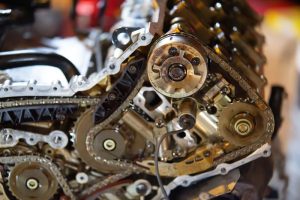
The timing belt is a reinforced rubber belt that synchronizes the rotation of the crankshaft and camshaft. This synchronization ensures that engine valves open and close at the correct time during each cylinder’s intake and exhaust cycles.
In simple terms, it keeps the engine “in rhythm.”
If the timing belt works correctly, the engine runs smoothly and efficiently. If it fails or slips, the engine loses synchronization, and internal components can collide with each other.
This is where the real danger begins.
Modern engines rely heavily on precise timing. Even a small disruption can lead to severe mechanical failure. That is why timing belt engine damage is considered one of the most critical risks in automotive maintenance.
What Happens When a Timing Belt Fails?
A timing belt can fail in several ways. It may snap suddenly, wear out over time, or lose tension and slip out of alignment.
When this happens, the engine’s internal timing is immediately disrupted.
In interference engines, which are common in modern vehicles, pistons and valves occupy the same space at different times. If the timing belt breaks, these components collide.
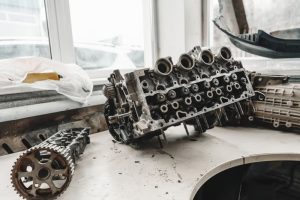
This collision can bend valves, damage pistons, and in severe cases, crack the engine block.
This is the point where timing belt engine damage becomes extremely costly. Instead of replacing a simple belt, the driver may face a full engine rebuild or replacement.
The damage happens within seconds, often while driving at normal speed, which makes it even more dangerous.
Why Timing Belt Failure Leads to Expensive Repairs
Repair costs after timing belt failure are high because the damage is not limited to a single part.
Once the belt breaks, multiple internal components may be affected at the same time. Mechanics often find bent or broken valves, damaged pistons, worn cylinder heads, and destroyed camshaft components.
In extreme cases, total engine failure occurs.
Repairing or replacing these parts requires complete engine disassembly, specialized labor, and expensive components.
This is why timing belt engine damage often results in repair bills ranging from a few thousand dollars to the cost of a full engine replacement.
For many older vehicles, the repair cost can exceed the value of the car itself.
Interference Engines vs Non-Interference Engines
Not all engines react the same way to timing belt failure.
Interference engines are designed with tight tolerances. If the timing belt fails, pistons and valves collide immediately, resulting in severe internal damage.
Non-interference engines, on the other hand, have more clearance between components. If the belt breaks, the engine simply stops running without internal damage.
However, most modern vehicles use interference engines because they are more efficient and powerful. This increases the risk of timing belt engine damage significantly if maintenance is ignored.
Warning Signs Before a Timing Belt Fails
One of the biggest challenges with timing belt failure is that it often happens without clear warning. However, in some cases, there are subtle signs that drivers may notice. Engine misfires, rough idling, ticking noises from the engine, or difficulty starting the car can sometimes indicate timing belt wear.
Unfortunately, these symptoms are not always obvious, which is why many drivers experience sudden breakdowns without prior notice. Automotive experts recommend replacing the timing belt based on mileage or time intervals rather than waiting for symptoms. Ignoring these early indicators significantly increases the risk of timing belt engine damage.
Real-Life Example: When a Simple Belt Became a $4,000 Repair
Consider the case of a driver commuting daily in an older sedan. The vehicle had crossed 120,000 miles, but the timing belt had never been replaced. One morning, while driving on the highway, the engine suddenly shut down. The car was towed to a repair shop, where mechanics diagnosed a broken timing belt.
The damage was severe. Multiple valves were bent, and the cylinder head required full replacement. The final repair cost exceeded $4,000, far more than the price of a routine timing belt replacement, which would have cost only a few hundred dollars.
This real-world scenario shows how timing belt engine damage can turn a simple maintenance issue into a financial disaster.
Why Timing Belts Wear Out Over Time
Timing belts are made of reinforced rubber and fibers, which degrade naturally over time. Heat from the engine, oil contamination, and constant mechanical stress all contribute to wear.
Even if a car is not driven frequently, the belt still ages. This is why manufacturers recommend replacement every 60,000 to 100,000 miles, depending on the vehicle. Ignoring this schedule significantly increases the chances of timing belt engine damage, especially in older vehicles.
The Cost Difference: Replacement vs Engine Damage
Replacing a timing belt is relatively affordable compared to engine repairs. A standard timing belt replacement typically costs a few hundred dollars.
However, once failure occurs, costs escalate dramatically. Engine rebuilds or replacements can reach several thousand dollars. This huge cost difference is why mechanics strongly emphasize preventive maintenance. In financial terms, avoiding timing belt engine damage is one of the easiest ways to save money in vehicle ownership.
Expert Insight: What Mechanics Want Drivers to Know
Automotive professionals consistently highlight one key message: timing belt replacement should never be delayed. Experienced mechanics often compare it to changing a smoke alarm battery. It is a small maintenance task that prevents a major disaster.
They also emphasize that water pumps and tensioners should be replaced along with the timing belt because they are often located in the same system and wear out at similar rates. Neglecting these components increases the risk of timing belt engine damage.
How to Prevent Timing Belt Failure
Preventing timing belt failure is not complicated, but it requires discipline. Regular maintenance according to manufacturer guidelines is essential. This includes scheduled inspections and timely replacements. Using quality parts also plays a major role in durability.
Drivers should also pay attention to engine noise changes and any unusual vibrations. While prevention cannot eliminate all risks, it significantly reduces the chances of timing belt engine damage and expensive repairs.
The Role of Modern Engine Design
Modern engines are more efficient but also more sensitive to timing issues. Tighter tolerances and advanced performance designs mean that even a small timing error can cause major problems. Some newer vehicles use timing chains instead of belts, which are more durable but still require maintenance. However, many cars on the road today still rely on timing belts, making awareness of timing belt engine damage highly important for drivers.
Why Ignoring Replacement Schedules Is Risky
One of the most common mistakes car owners make is assuming that a timing belt will last “just a little longer.” This assumption can be extremely costly.
Timing belts do not always show visible signs before failure. Waiting too long increases the risk of sudden breakdowns and severe engine damage. This is why manufacturers provide strict replacement intervals.
Following these guidelines is the simplest way to avoid timing belt engine damage entirely.
Featured Snippet Answer
Yes, a failed timing belt can absolutely lead to thousands of dollars in engine damage. In interference engines, a broken timing belt causes pistons and valves to collide, resulting in bent valves, damaged pistons, and potential engine failure. Repair costs often far exceed routine maintenance expenses.
Conclusion: A Small Part With Massive Consequences
The timing belt may look like a simple rubber component, but its role in engine performance is critical. When it functions properly, it keeps the engine running smoothly. When it fails, the consequences can be financially devastating.
Understanding timing belt engine damage helps drivers make informed decisions about maintenance and repairs. Instead of risking expensive breakdowns, regular replacement is the safest and most cost-effective solution.
In the world of automotive maintenance, few small parts carry such high stakes. The timing belt is one of them.
FAQs
How serious is timing belt engine damage?
Timing belt engine damage is extremely serious because it can destroy internal engine components such as valves and pistons. In many cases, the damage requires a full engine rebuild or replacement, making it one of the most expensive mechanical failures a vehicle owner can experience.
How often should a timing belt be replaced?
Most manufacturers recommend replacing a timing belt between 60,000 and 100,000 miles. However, exact intervals vary depending on the vehicle. Following the maintenance schedule is essential to avoid unexpected timing belt engine damage and costly repairs.
What are early signs of timing belt failure?
Early signs may include engine misfires, ticking noises, rough idling, or difficulty starting the car. However, timing belts often fail without warning, which is why regular inspection is critical to prevent timing belt engine damage.
Can I drive with a worn timing belt?
Driving with a worn timing belt is extremely risky. If it breaks while driving, it can cause immediate engine failure. This significantly increases the chances of severe timing belt engine damage and expensive repairs.
Is replacing a timing belt cheaper than repairing engine damage?
Yes, replacing a timing belt is far cheaper than repairing engine damage. Routine replacement costs a few hundred dollars, while timing belt engine damage repairs can cost thousands or even exceed the value of the vehicle.